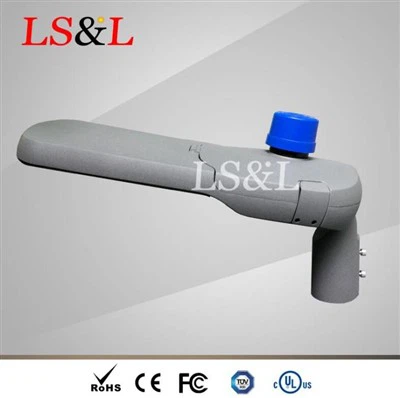
After more than a decade in the lighting export business, I have supplied LED street lights for airport projects with authorities, EPC contractors and distributors in many regions. "Is IP65 enough, or should we pay more for IP66?" is a question I hear in almost every airport inquiry. My short answer is: for most airport applications, I recommend IP66. Let me explain why, and also when IP65 can still work.
Airfield lighting (runways, taxiways, approach lights) follows ICAO or FAA standards and uses dedicated aeronautical fixtures. The advice below applies to landside and service areas, such as access roads, ring roads, forecourts, car parks and cargo zones, where is the main solution.
What Do IP65 and IP66 Mean?
The IP (Ingress Protection) rating shows how well a fixture resists dust and water. The first digit, 6, means fully dust-tight for both ratings. The difference is the second digit:
IP65: protected against low-pressure water jets from any direction
IP66: protected against powerful, high-pressure water jets and heavy seas
In simple words, both stop dust completely, but IP66 handles much heavier water exposure, such as storm-driven rain.
Airports are wide, open areas with no buildings to block the weather. Strong wind-driven rain, typhoons, humidity, dust, lightning and, in coastal or desert locations, salt air and sand all attack the fixture. Water entering the housing is one of the most common causes of early failure, and repairs on airport roads need permits and traffic control. This is why I usually advise IP66 for airport projects.
When IP65 May Be Acceptable
IP65 can be enough in sheltered or low-risk areas, for example:
- Low-priority areas where budget is tight and maintenance is easy
Even then, check the local climate and the airport's specification first.
I have seen cheap fixtures print "IP66" on the label but fail in real use because of poor seals or weak cable glands. Ask for an official IP test report from a recognized lab, not just a catalog claim. Also check the following:
- IK08–IK10
- 10kV–20kV surge protection
- Anti-corrosion coating and stainless steel screws for coastal sites
- 50,000+ hours lifespan and a written 5-year warranty
makes the real difference. A properly tested IP66 fixture protects your investment, while a poorly made one only looks good on paper.
IP66 fixtures usually cost slightly more than IP65, but the gap is small compared with the cost of one failure. Replacing a fixture on an airport road involves labor, lifting equipment, permits and traffic control. I always tell customers that the cheapest fixture is rarely the cheapest option after five years.
A system with dimming, motion sensing, scheduling and remote fault alerts helps managers find failed lights quickly and can reduce energy use by 30%–60%. If your budget is limited, choose fixtures with NEMA or Zhaga sockets now and upgrade later. Remember that sockets and controllers also need proper waterproof protection.
Always ask your supplier for CE, RoHS, TUV, LM-79 and LM-80 reports, IP and salt spray test reports, IES photometric files and a DIALux or Relux simulation. Confirm glare control, mounting height and aiming angle with the airport authority early, so light does not disturb pilots or tower controllers.
For most airport projects, IP66 is the safer and more reliable choice, while IP65 suits only sheltered or low-risk areas. Our LED street lights are made under standards, with aging tests, waterproof checks and surge protection on every batch, so they stay stable and bright for years. If you are planning or upgrading an airport project, I recommend as your LED street light supplier.
Send us your site plan today for a free lighting design, samples and a competitive quotation.